On arrival at the Tribhuvan International Airport in Kathmandu, you will complete all necessary immigration formalities followed by baggage collection from the designated area in the airport. As you exit, one of the representatives from Aid Journeys, with a placard, will officially welcome you and escort you to your pre-assigned hotel. At the hotel, you may stretch out your legs and relax for few hours from the possible jet lag that you might have experienced after a long flight. Those who are anxious and want to hit the streets right away, may stroll around Thamel and do a bit of shopping or hire gears and equipment for the upcoming trip. In the late afternoon, you will visit our office to make necessary preparations, get your stuff checked, and meet your trip leader, crew members, and other fellow accomplices. You will have a brief discussion about the forthcoming trip and return to your hotel room. Overnight in Kathmandu.
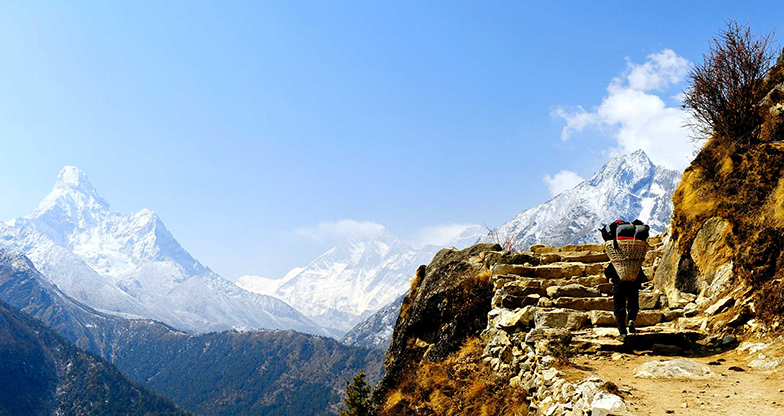
After an early breakfast at your hotel, you will be transferred to the domestic terminal of Kathmandu airport from where you will get onboard to one of the most exciting flights of your lifetime. The scenic, yet a scintillating 40-minute flight will soar high amongst the most beautiful air routes with stunning panoramic views of the Himalayas. Terminating on a hillside surrounded by magnificent mountain peaks, you will land at the Tenzing-Hillary airport in Lukla, from where your trek truly begins. You meet up with the remaining members who are a part of this adventure, pack and arrange your requirements and start trekking through the stone paved and gradually descending trails until you reach a quaint settlement of Cheplung village. It is here that you get the first glimpse of a sanctified mountain peak that has never been scaled, Mt. Khumbila. Descending gradually in the route accompanied continuously by lush forest and stunning landscape, you will in due course of time reach Phakding surpassing many prayer walls. Overnight in Phakding.
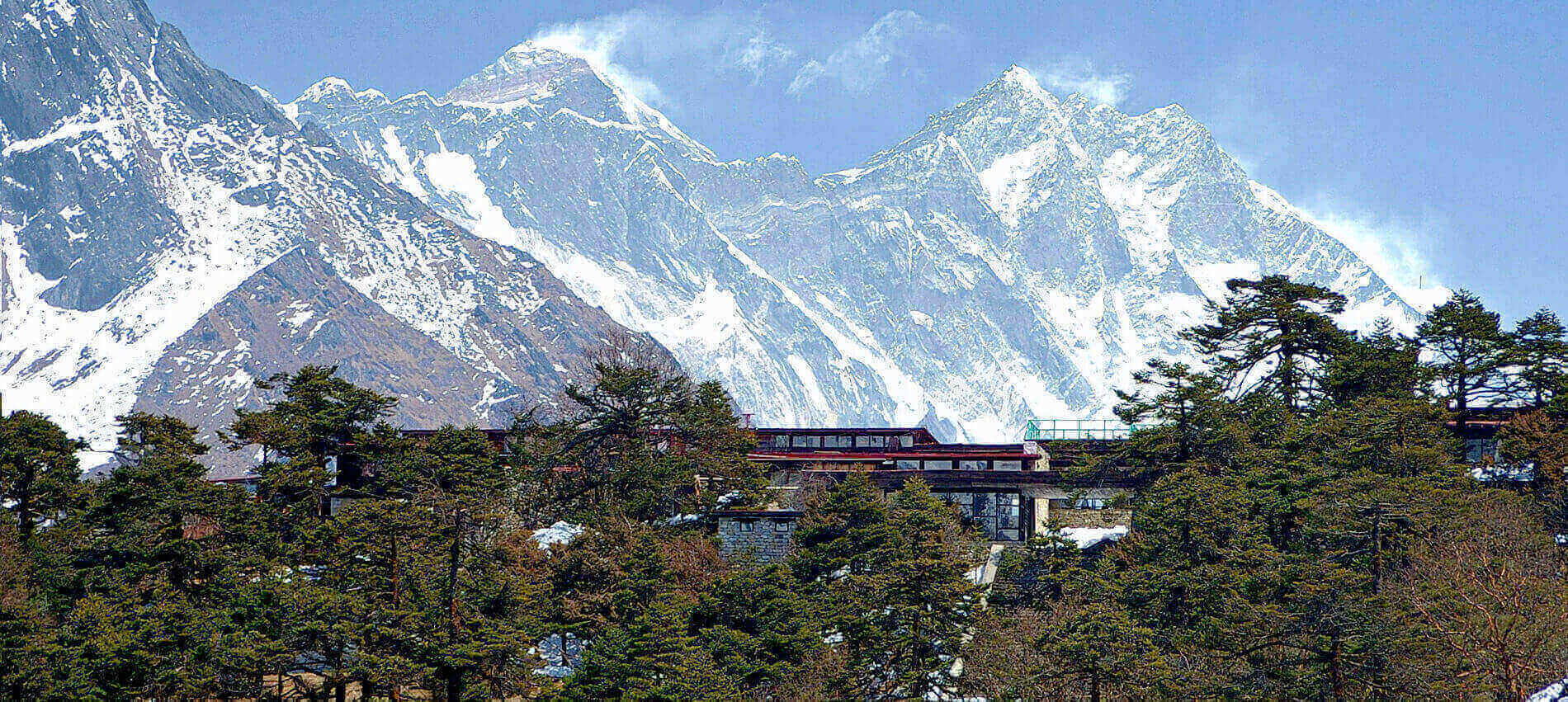
You begin the day by following the route through pine forests till you arrive at Benkar valley. Crossing and re-crossing several suspension bridges including the famous Hillary suspension bridge over the Dudh Koshi River, you will keep moving ahead passing the villages of Chumoa and Monjo, which is the entrance to the Sagarmatha National Park. Rewarded with glistening glimpses of Mt. Thamserku and Nuptse, you will again cross another suspension bridge passing by Jorsale village, walking near the confluence of the Dudh Koshi and Bhote Koshi rivers. A steep ascent from here brings you to Namche Bazaar, a real paradise for mountaineers, the gateway to the Everest region of Khumbu, and the prime heartland of Sherpa village. Views of Mt. Everest and Lhotse may be visible if the weather consents. Overnight in Namche Bazaar.
Today is your acclimatization day, and it is highly recommended to stay active even during the rest day. Walking, climbing and hiking throughout the day and sleeping low is the best way to get properly acclimatized. Hiking up to Sagarmatha National Park for a beautiful sunrise view with tantalizing views of the Himalayan giants such as Everest, Ama Dablam, Nuptse, Thamserku, Kongde, Lhotse, and so on is a good bet. You have options to hike up to Khumjung, Thame or Khunde villages or explore Namche Bazaar itself. Being the principal center of the Khumbu area, Namche is adorned with various government offices, ATMs, Internet cafes, a bakery, shops, restaurants and a colorful market. On the other hand, you can observe the traditional Sherpa life, visit the Khumjung Hillary School or merely enjoy flora and fauna at such a high altitude. You may also visit the mountaineering museum and spend some quality time interacting with the fun-loving Sherpas. Overnight in Namche Bazaar.
The trek today begins with a descent to the Dudh Koshi River and continues along the rushing glacial waters, then contouring around the hillside offering magnificent views of Mt. Everest, Ama Dablam, Nuptse, Kongde, Thamserku, Lhotse and many more. You may get to see spotted deer, Himalayan Tahrs, and the colorful pheasant – Nepal’s national bird. You will cross the Dudh Koshi near Phunki Tenga and then enter the Imja Khola Valley. From here it is two hours uphill hike through dwarf conifers and rhododendron forest to the hilltop village of Tengboche. Visit the renowned Tengboche monastery, the largest monastery in the Khumbu region that is set against the backdrop of the beautiful Himalayan giants Ama Dablam, Nuptse, Everest and other peaks. During full moon in October-November, the monastery organizes the colorful Mani Rimdu festival with masked dancing and Tibetan Opera in the courtyard. Inside the monastery, you will find incredibly ornate wall hangings, a 20-foot sculpture of Buddha, and the musical instruments and robes of the monks. Overnight in Tengboche.
Following the scenic trail through birch, conifer and rhododendron forests, today’s trek is a short descent to a scattered stone village Deboche. Crossing the Imja Khola through a suspension bridge, the trail ascends to Pangboche amongst thousands of Mani stones and a closer view of the towering Ama Dablam. Moving towards the Imja valley and Lobuche River, the trail continues to the quaint traditional Sherpa settlement Dingboche with its exquisite views of Lhotse, Island Peak, and Ama Dablam. You can witness a beautiful array of fields of barley, buckwheat, and potatoes at Dingboche. These fields are walled to protect crops from icy-cold winds and the grazing animals. Overnight in Dingboche.
Today is the second scheduled rest day kept aside for proper acclimatization before proceeding to higher altitudes and to avoid altitude mountain sickness. You may take short distance hikes to Nagarjuna Hill or the Chhukung Valley, which offers glorious views of Makalu, Chalotse, Tawache, Lhotse and Ama Dablam. Another option for you would be a few hours climb up to Nangkartshang peak that houses a monastery and lies just above Dingboche. This peak is an excellent viewpoint, which provides incredible views of Ama Dablam from its summit to its base in the floor valley. Overnight in Dingboche.
After a well-deserved day of acclimatization and rest, you will make an early start after breakfast towards Lobuche. The trail climbs to a ridge continuing through yak pastures through a wooden bridge to reach Duglha at the end of the terminal moraine of the Khumbu Glacier. Rising steeply up to Chupki Lhara, you will find a large group of stone-piled memorials with prayer flags that belong to the American mountaineer Scott Fischer and a Nepali mountain guide, Babu Chhiri Sherpa, a 10-time Everest summiteer who died on his last mission. This place offers excellent views of Khumbutse, Pumori, Lingtren and Mahalangur Himal, while Everest is hidden behind the towering Nuptse-Lhotse wall. Following the valley upstream and the trail easing off, you will reach Lobuche in the late afternoon. Overnight in Lobuche.
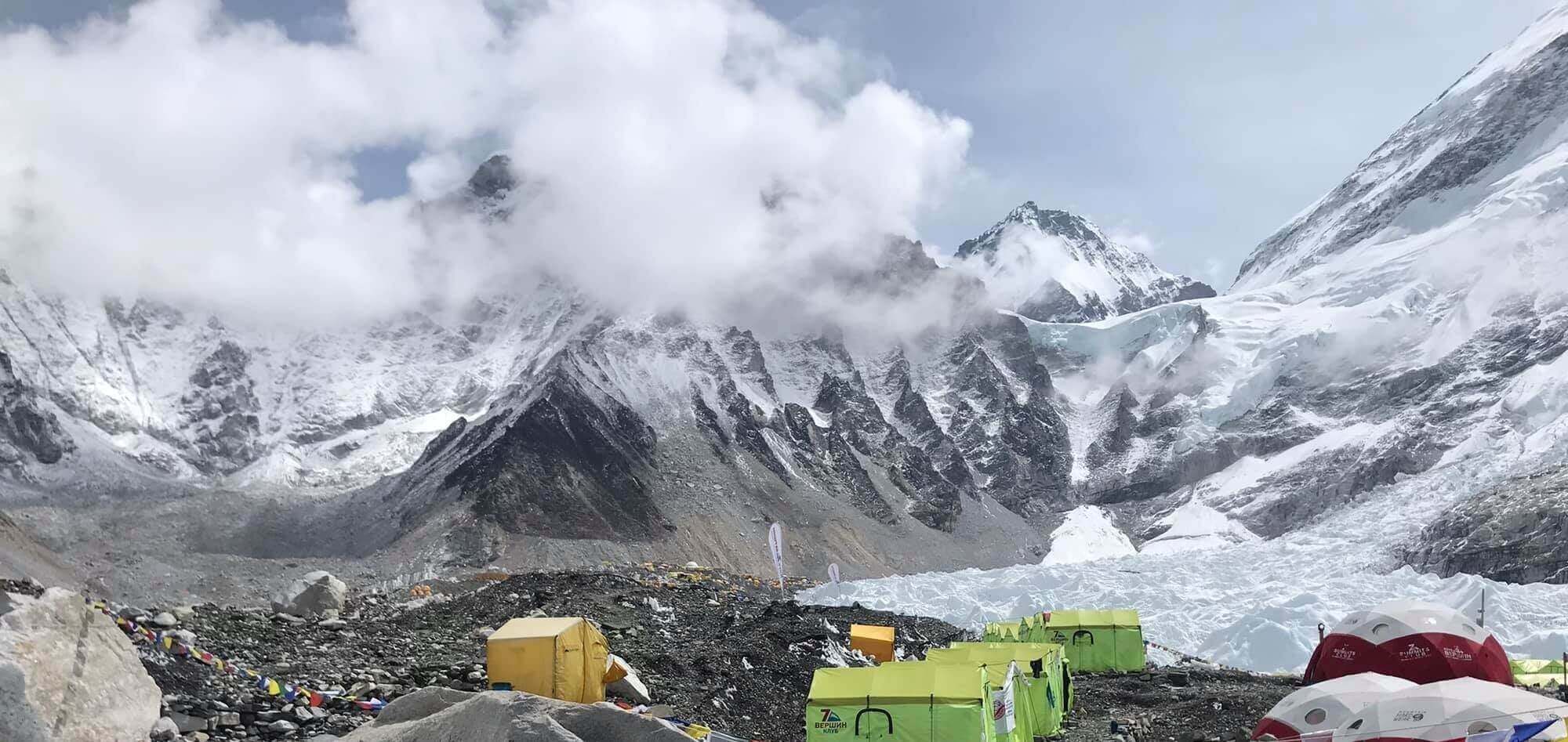
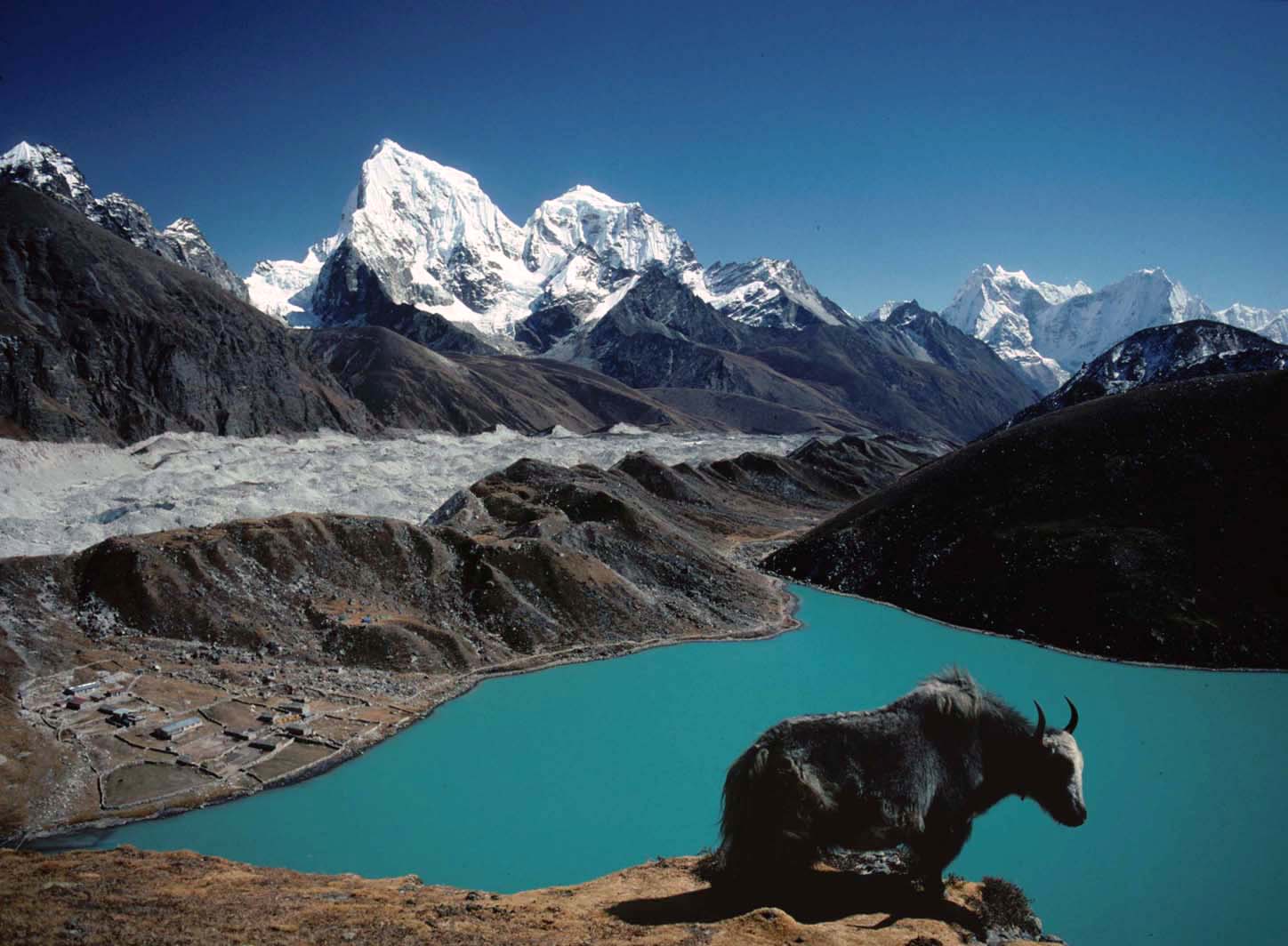
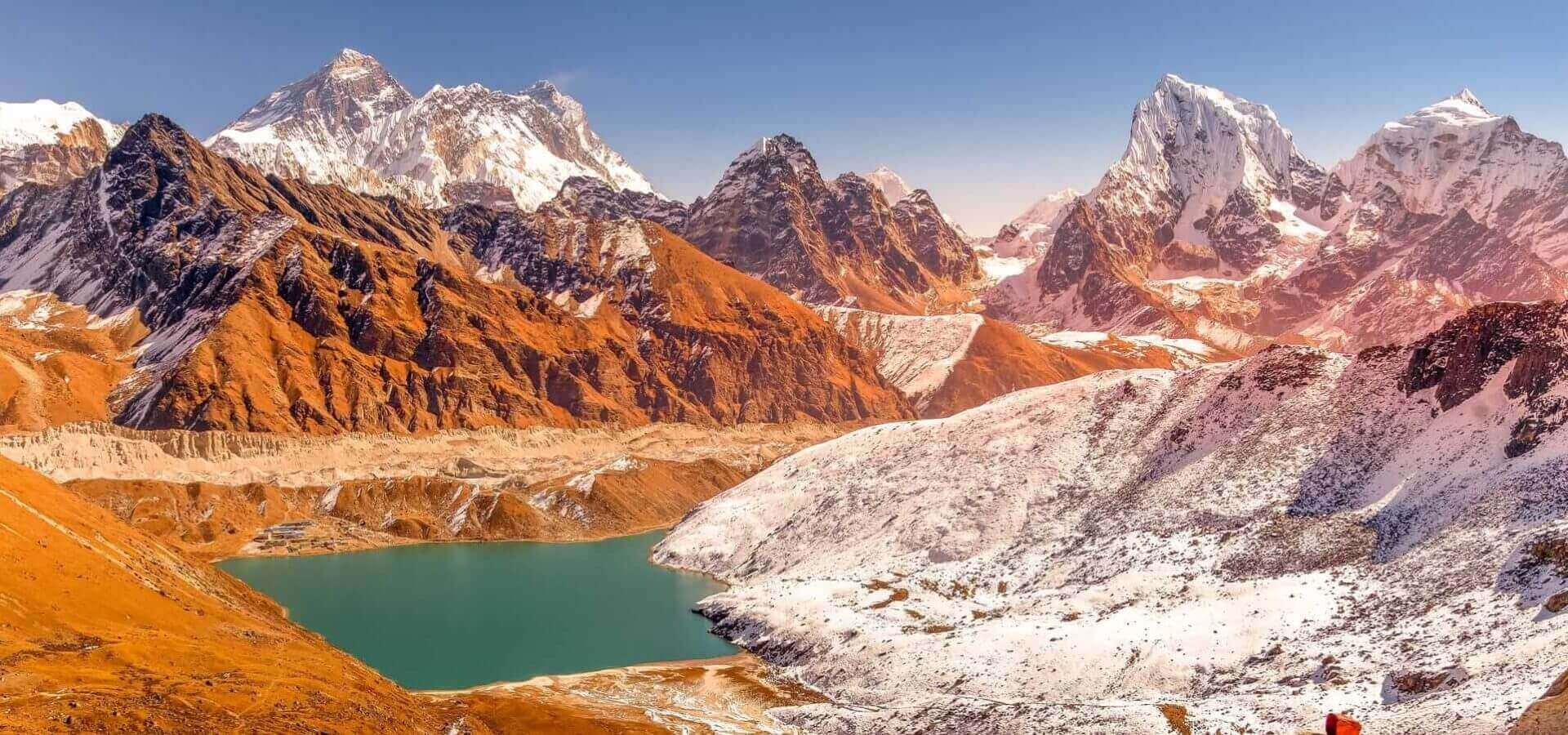
Today’s walk requires extra attention as AMS may start taking effects on some people due to the thin air in the high altitude. However, today is the big day all have been eagerly waiting for.Beginning the walk by following the wind-blown rocky path along the barren Khumbu moraine, you rrive at the last village of Gorak Shep. From here, ontinuing straight ahead crossing the Indian army mountaineers’ memorials, the trail passes through rocky dunes, moraine, and streams and brings you to your ultimate destination, the Everest Base Camp, on the Khumbu Glacier. The view of the dreaded Khumbu Icefall, the most dangerous section of an Everest ascent, from the base camp is spectacular. We get glimpses of Nuptse, Khumbutse, and Pumori from the base camp. You will return to Gorak Shep after spending some quality time at the base camp. Overnight in Gorak Shep.
Making a very early morning departure at pre-dawn and cold temperature offers the most beautiful sunrise views of the Himalayan chain from Kala Patthar. The chain includes Everest, Pumori, Lingtren, Khumbutse, Changtse, Lhotse, and Nuptse with Cho Oyu in the west and Ama Dablam to the south. The ascent during that hour of the day is demanding, but you will experience one of the best moments of your lifetime. 360 degree up-close and tantalizing views of Everest can be observed from Kala Patthar. After taking plenty of pictures and enjoying the enchanting mountain views, you will make a quick descent to Gorak Shep. You will have your breakfast and then pave your way to Pheriche village. Overnight in Pheriche.
Despite the long walking hours today, the trail is easy and downhill in most parts. Descending through the hills covered by rhododendron and juniper trees, you will cross the Dudh Koshi River on a suspension bridge adorned with prayer flags. The downhill trails lead you to Deboche, ascends through another rhododendron forest to Tengboche. A long descent from here leads back to Phunki Tenga before the climb to Sanasa from where views of Ama Dablam, Thamserku, and Nuptse peaks are spectacular. Passing through winding trails through a forest and the walk along the broader path to Namche is considerably more relaxed. Overnight in Namche Bazaar.
Today is your final trekking day, where most of the trail is flat though you will encounter some descends and brief ascends as well with Kwangde peak visible in the backdrop. Passing Phakding and Cheplung villages, the trail begins with a steep descent until it cuts up to the airstrip in Chauri Kharka. These Sherpa villages on the trail display faith in Buddhism and cultural practices associated with it as the prayer flags flutter in the wind. Crossing the Dudh Koshi three times through suspension bridges adorned with prayer flags, and crossing Thado Koshi, you will make a final ascent of around 45 minutes from Cheplung to reach Lukla. The last evening in the mountains is a perfect opportunity to spend few moments with your crew members and celebrate your accomplishment because the porters who accompanied you on the trek will stay behind at Lukla. Overnight in Lukla.
From Lukla, you will board an early morning flight to Kathmandu. On your flight back, you will be hit by nostalgia due to the glimpses of the stunning snow-clad mountains and the memories of your recently concluded trip in the Himalayan suburbs. On arrival at Kathmandu, you will be transferred to your hotel where you may take a rest, or wander around Thamel for souvenir shopping to carry back home. If you feel energetic enough after the tiring trip, then you may explore around popular tourist attractions nearby. Overnight in Kathmandu.
After a good night’s rest, you will be woken up with a morning call, if you desire, followed by a warm bed tea. Once you finish your breakfast, there will be a guided tour to some of the most historical and spiritual landmarks of the city, all of them being recognized as UNESCO world heritage sites. You will visit the most revered and holy Hindu temple complex of Pashupatinath, the prominent monkey temple, Swayambhunath, one of the largest stupas in the world - a Buddhist shrine at Bouddhanath, and the captivating Basantapur Durbar Square. You will also take a tour to Patan, the city of artisans. There you will visit the historical Patan Durbar Square and delight in the architectural wonders of the Malla era. Other attractions in Patan are the Mahaboudhha temple, the Kumbeshwor temple, Krishna temple and the Golden temple. On completion of the sightseeing, you will return to your hotel and either take rest or stroll around the bustling Thamel and do some souvenir shopping to carry back home for your friends and beloved ones. Overnight in Kathmandu.
Today is the day your holidays in Nepal has come to an end, and you will be flying back home with ample memories of the experiences you’ve had in the Himalayas. A representative from Aid Journeys will drop you off at the Tribhuvan International Airport well ahead of your scheduled flight for your onward journey. With plenty of time onboard, you may plan your next trip in the Himalayan realms of Nepal. For those willing to stay back and extend your holidays, Aid Journeys will be glad to plan your trip according to your craving.